

What You Need to Borrow Money Online in Canada
By the BorrowNow.ca editorial team · Published August 17, 2026 · Last updated October 8, 2026
When you need to borrow money online in Canada, you need exactly six things: to be the age of majority in your province, to be a Canadian resident, to have steady full-time or part-time employment income, an active Canadian bank account, valid government ID, and working contact details. That is the whole list; a perfect credit score is not on it.
The quick version: online lenders approve on verified income, not credit-score perfection. If you are an adult Canadian resident with a job, a bank account, and ID, you already qualify to apply for anything from $50 to $50,000 through licensed lenders, and when you need to borrow money quickly, the income check takes about 60 seconds through read-only bank verification. What sinks applications is almost never a missing document; it is mismatched details and income the lender cannot see.

The 6 Things You Need to Borrow Money Online
To borrow money online in Canada you need six things: legal age in your province, Canadian residency, steady full-time or part-time employment income, an active Canadian bank account, valid government-issued ID, and a working phone number, email, and address. Every licensed online lender builds its application around that same short list, because those six items are what the law and basic underwriting actually require.
| # | Requirement | What satisfies it |
|---|---|---|
| 1 | Age of majority | 18 in AB, SK, MB, ON, QC, PEI; 19 elsewhere |
| 2 | Canadian residency | Living in Canada with a Canadian address |
| 3 | Steady income | Regular full-time or part-time employment deposits |
| 4 | Bank account | An active Canadian chequing account in your name |
| 5 | Government ID | Driver’s licence, passport, or provincial photo ID |
| 6 | Contact details | Phone, email, and current home address |
Notice what is missing: no minimum credit score, no cosigner, no collateral, no printer, no fax machine, no branch visit. The rest of this guide walks through each requirement, what lenders are actually checking, and how to make sure your application passes on the first try when you genuinely need to borrow money.
1. Age of Majority and Canadian Residency
You must be an adult in your own province to sign a loan agreement, which means 18 in Alberta (see our online loans Alberta guide), Saskatchewan, Manitoba, Ontario, Quebec and Prince Edward Island, and 19 in BC, New Brunswick, Nova Scotia, Newfoundland and Labrador, the Yukon, the Northwest Territories and Nunavut. This is not a lender preference; a credit contract signed by a minor is generally unenforceable, so no licensed lender will fund one, however urgently you need to borrow money.
Residency works the same way: lenders licensed in Canada lend to people living in Canada, because provincial consumer protection law is what governs the agreement. You do not need to be a citizen; permanent residents and many work-permit holders qualify with the same six items, as long as the address, the bank account, and the income are Canadian.
2. Steady Employment Income
Income is the requirement that actually decides most applications, because online lenders approve on ability to repay. What they want to see is simple: regular deposits from full-time or part-time employment landing in your account on a predictable rhythm. Weekly, bi-weekly, semi-monthly, and monthly pay cycles all work; what matters is the pattern, not the label on the job.
There is no universal minimum salary. A modest but steady part-time income that comfortably covers a small payment approves more often than a big income with a chaotic account. When you need to borrow money, the honest self-test is a payment-sized one: take the loan payment you are considering and ask whether your normal month absorbs it without touching rent or groceries. That is roughly the same math the lender runs.

3. An Active Bank Account (and How IBV Uses It)
The bank account does three jobs at once: it proves your income, it receives the money, and it makes repayment automatic. That is why an active Canadian chequing account in your own name is non-negotiable when you need to borrow money online, and why the account should be the one your pay actually lands in.
Income verification happens through Instant Bank Verification (IBV): you log in through an encrypted, read-only session run by a verification provider, the lender sees a snapshot of your recent deposit history, and the session ends. It takes about 60 seconds, nobody sees or stores your password, no one can move money, and comparing offers this way involves no hard credit pull. If you would rather understand the security side in depth before connecting anything, our guide to borrowing money safely online covers exactly what read-only means and the checks to run on any lender first.
One practical tip that prevents a surprising number of declines: apply with the account where your pay is deposited, not a secondary account you transfer spending money into. A lender looking at the secondary account sees transfers, not payroll, and transfers do not read as income.
4-6. ID, Address, and Contact Details
The last three requirements take two minutes to satisfy and cause the most preventable failures when you need to borrow money online. Valid government ID means a driver’s licence, passport, or provincial photo card that is current and matches the name on your bank account. Your address should match what your bank and employer have on file. Phone and email need to be ones you actually answer, because lenders confirm details and send the loan agreement there.
The theme across all three is consistency. Underwriting systems cross-check your application against your ID and your banking profile, and every mismatch, an old address, a maiden name on one document, a typo in a birthdate, reads as risk. When people say they were declined “for no reason,” a detail mismatch is the most common reason there actually was.
What You Do NOT Need to Borrow Money
Half the anxiety around online borrowing comes from requirements that do not exist. When you need to borrow money from a licensed Canadian online lender, you do not need:
A perfect credit score. Income-based lenders consider all credit histories, weighing steady deposits over your file. Bad credit narrows offers and can raise the rate inside the legal cap; it does not close the door. Our personal loans hub covers how approval works when your score has taken hits.
A cosigner or guarantor. Standard online instalment and short-term loans are approved on your own income. Nobody else signs.
Collateral. These are unsecured loans: your car and your home are not part of the deal.
Documents by fax or email. IBV replaced pay stubs, void cheques, and scanned utility bills. A lender who still wants paperwork emailed around is behind the times, and one who asks for your banking password by email is running a scam, full stop.
A reason. You will usually be asked what the loan is for, but “car repair,” “moving costs,” or “catching up after a short month” are all fine answers. There is no approved-purposes list.
What You Need to Borrow Money at Each Loan Size
The six requirements never change, but how closely the income half is examined scales with the amount you ask for. Through BorrowNow’s network the band runs from $50 to $50,000, and it helps to know what each range expects:
| Amount | Typical product | What the check looks like |
|---|---|---|
| $50 to $1,500 | Short-term and payday-style loans | The standard six items; decisions in minutes on the IBV snapshot |
| $1,500 to $10,000 | Instalment loans over months to a few years | Same six items, with more weight on deposit history covering the monthly payment |
| $10,000 to $50,000 | Larger instalment loans | Same six items plus a closer affordability look; some lenders verify employment directly |
Pricing context while you compare: every ordinary loan in Canada must price at or under the federal 35% APR criminal interest rate cap, and payday-style products run under a separate provincial regime capped at $14 per $100 borrowed, with the full dollar cost disclosed in writing before you sign under Canada’s cost-of-borrowing rules. On a $500 short-term need, that is the difference between roughly $29 of interest over a 3-month instalment plan and a $70 payday fee due in one payment.
Decide the Amount Before You Apply
The first decision is the number, and it should be the smallest amount that solves the real problem. A smaller loan carries less total interest, approves on a lower income threshold, and leaves room in next month’s budget.
Common sizes, with what each one usually covers: $100 for a utility bill or a transit pass, $200 for a phone bill or a prescription, $300 for a car repair or a dental co-pay, $500 for a larger repair or a rent gap, $1,000 for moving costs or a major shortfall. Above that, the instalment tier from $1,500 to $50,000 spreads a planned expense over months to a few years.
Run the expense through four questions first. Is it one-off or recurring? A car repair is one-off; a grocery gap every month is structural, and borrowing against a structural gap digs it deeper. Can it wait until payday? Waiting is free and a loan is not.
What does doing nothing cost? NSF fees (capped at $10 at federally regulated banks since March 2026), a towed car from about $300, or missed shifts can cost more than the loan’s total interest, and when they do, borrowing is the cheaper of two real options. Does the payment fit with room to spare? Put the monthly figure next to rent, utilities, food and existing debts; if it only fits in the optimistic version of next month, decline. Pass all four and a loan is doing the job it was built for.
The Application, Step by Step
Here is the whole process for the day you need to borrow money, gathered items in hand:
The form itself is open at any hour. What changes at night and on weekends is the funding time: lenders review files in business hours, and e-Transfers land once the lender releases them, so a Friday night application usually funds Monday morning.
Step 1: pick your number first. Decide the smallest amount that solves the real problem. Every other decision gets easier once the number is fixed.
Step 2: fill in the application. Name, address, income details, and the amount, exactly as they appear on your ID and bank profile. This takes about five minutes.
Step 3: verify income through IBV. The 60-second read-only check replaces every document a branch would have asked for.
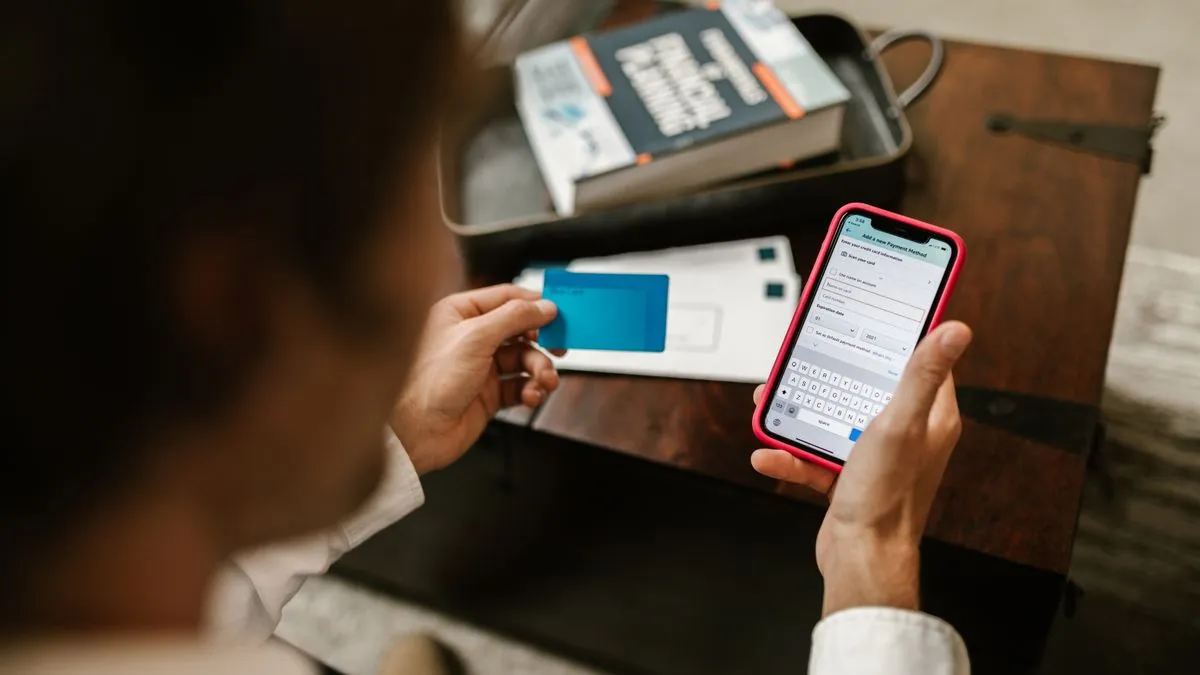
Step 4: compare the offers that come back. Look at the total repaid, not just the payment. A smaller payment over a longer term can cost more in total; the written cost disclosure exists so you can see that before signing.
Step 5: sign and get funded. Accept the offer that fits, sign electronically, and the money arrives by e-Transfer, often the same or next business day. Our get money now guide ranks the routes by speed if the clock is the main constraint.
Why Applications Get Declined (and Fixes)
When someone with a job and a bank account gets declined, it is usually one of four fixable problems rather than a mystery:
Invisible income. Your pay lands somewhere the lender cannot see, cash jobs, or deposits into an account you did not connect. Fix: apply with the account that receives payroll, and give the IBV snapshot a full pay cycle to show a deposit.
Mismatched details. The address on the application does not match the bank, or the name differs across documents. Fix: update your details with your bank first, then reapply with everything matching.
A payment-heavy account. Recent NSF charges or an account that empties to zero the day after payday tells the lender the new payment will bounce. Fix: let the account breathe for a cycle or two, or ask for a smaller amount with a payment your pattern clearly covers.
Asking too big. The income is real but thin relative to the request. Fix: this one is honest arithmetic; a smaller loan that fits approves where a bigger one fails, and paying it well builds the history that raises the ceiling next time.
A decline costs nothing and marks nothing when the comparison used no hard pull, so treat it as information: one of the four items above needs a cycle of attention before the next time you need to borrow money.
Province Rules at a Glance
The six things you need to borrow money online apply nationwide, with the province deciding the details around them. The age of majority is 18 in Alberta, Saskatchewan, Manitoba, Ontario, Quebec and PEI, and 19 everywhere else. Each province staffs a consumer protection regulator, Consumer Protection Ontario, Consumer Protection BC, Service Alberta and their counterparts, that licenses lenders and takes complaints. Quebec’s stricter permit regime means many online lenders route Quebec borrowers toward instalment products rather than payday-style loans. The federal 35% APR ceiling applies identically in every province and territory.

Still deciding who to ask? Our guide to borrowing from family vs an online lender compares both routes honestly.
Frequently Asked Questions
What do I need to borrow money online in Canada?
Six things: age of majority in your province (18 or 19), Canadian residency, steady full-time or part-time employment income, an active Canadian bank account, valid government ID, and working contact details. There is no minimum credit score requirement with income-based lenders.
Can I borrow money online with bad credit?
Yes. Licensed income-based lenders consider all credit histories and weigh steady employment deposits over your score. Bad credit can mean fewer offers or a higher rate inside the 35% APR legal cap, but the six requirements are the same whenever you need to borrow money.
Do I need a job to borrow money online?
You need steady employment income, full-time or part-time both qualify. Lenders verify the deposit pattern in your bank account through a 60-second read-only IBV check, so regular pay matters more than job title or hours.
What ID do I need to borrow money online?
One piece of valid government-issued photo ID: a driver’s licence, passport, or provincial photo card. It must be current and match the name on your bank account, since underwriting cross-checks your ID against your application and banking details.
Why do lenders need my bank account, and is that safe?
The account proves income, receives the funds, and handles repayment. Verification uses IBV: an encrypted, read-only session where the lender sees recent deposits and nothing else. Your password is never shown to the lender and nobody can move money through the check.
Do I need a cosigner or collateral for an online loan?
No. Standard online loans in Canada are unsecured and approved on your own verified income, so there is nothing to pledge and nobody else to sign. Anyone demanding a deposit or upfront fee before funding is running a scam, not offering a loan.
How fast is the money once I meet the requirements?
Decisions commonly arrive in minutes and funding follows by e-Transfer, often the same or next business day. The fastest applications are the accurate ones: when you need to borrow money fast, matching details across ID, bank, and application is what keeps approval from stalling.
The bottom line: what you need to borrow money online in Canada is six ordinary things most working adults already have, and none of them is a perfect credit file. Get the details consistent, apply with the account your pay lands in, and compare offers by the total repaid; the requirements take care of themselves after that.
Check Your Borrowing Options →
About Our Editorial Team
BorrowNow.ca Editorial Team
The BorrowNow.ca editorial team writes and updates the guides on this site. We cover ways to borrow money in Canada, show costs in real dollars, and check lending rules against federal and provincial sources. How BorrowNow works →
Disclaimer: BorrowNow.ca is not a lender. Product details and rate ranges above are general illustrations that change over time; confirm current terms directly with any institution before applying. We connect Canadians with lenders in our network for loans of $50 to $50,000; rates, terms, and approval are set by the lender and depend on your province and financial situation. All Canadian loans are subject to the federal 35% APR criminal interest rate cap. Borrow only what you can afford to repay.