
Borrow $300 Online in Canada: Apply Now, Any Credit
By Tony Freanisco, Personal Finance Writer at BorrowNow.ca · Published June 4, 2026 · Last updated July 19, 2026
Need to borrow $300 online in Canada? BorrowNow.ca connects Canadians with lenders who can approve a $300 loan promptly and deliver funds by Interac e-Transfer — often within hours. Whether it is a car repair, a medical bill, or an overdue payment, borrowing $300 online in Canada is simple, direct, and open to all credit types.
The quick version: Apply in about 5 minutes, get matched with a Canadian lender, confirm your income with secure Instant Bank Verification (IBV) (read-only, ~60 seconds, no credit-score impact), and receive your $300 by Interac e-Transfer. Any credit score is considered, and every loan is capped at 35% APR under Canadian law.
What Is a $300 Online Loan in Canada?
A $300 online loan is a short-term personal loan applied for and received entirely online. When you borrow $300 online in Canada through BorrowNow.ca, you submit a short application, get matched with a Canadian lender, review the full loan terms, and receive $300 in your bank account by Interac e-Transfer.
A $300 loan sits in a practical middle range — large enough to cover a meaningful expense, but small enough that most approved applicants are funded the same business day. These loans are unsecured, meaning no collateral is required, and BorrowNow.ca works with lenders who consider all credit profiles.

Who Can Borrow $300 Online in Canada?
Most Canadian adults can apply to borrow $300 online through BorrowNow.ca. Requirements are straightforward:
- Age: At least 18 years old
- Residency: Canadian resident (all 10 provinces)
- Income: Regular full-time or part-time employment income deposited to your bank account
- Bank account: Active Canadian bank account for Interac e-Transfer
- Contact: Valid email address or phone number
No minimum credit score is required. BorrowNow.ca’s lender network specializes in approving Canadians with all credit backgrounds — including poor credit, no credit history, and past collections. New to borrowing with a low score? See our guide to borrowing online with bad credit.

How to Apply for a $300 Loan at BorrowNow.ca
Borrowing $300 online in Canada through BorrowNow.ca follows a simple process:
- Complete the application. Fill in the secure online form — your name, address, employment income, and $300 as the requested loan amount. Takes about five minutes, and applying does not trigger a hard credit check.
- Get matched in minutes. BorrowNow.ca matches your profile with lenders in our network best positioned to approve your $300 application.
- Verify your income with IBV. Your matched lender confirms your income through a secure, read-only Instant Bank Verification connection in about 60 seconds.
- Review the full loan offer. Your lender shows you the complete terms: loan amount, interest rate, APR (capped at 35%), repayment dates, and total cost. No obligation to accept.
- Sign and receive your $300. Digitally sign the agreement and the lender transfers $300 to your Canadian bank account by Interac e-Transfer.
Learn more about the full borrowing process in our complete guide to borrowing money online in Canada.
How Soon Can You Receive $300 Online in Canada?
One of the biggest advantages of borrowing $300 online in Canada is the speed compared to a traditional bank:
- Application: 5 minutes
- Lender match: In seconds
- Income verification (IBV): About 60 seconds
- Approval decision: Minutes to a couple of hours
- e-Transfer to your account: Often within hours — the same business day for morning applications
For best results, apply before 2:00 PM on a weekday and enable Autodeposit on your bank account. Autodeposit means your $300 arrives automatically when the e-Transfer is sent — no manual acceptance needed. See how soon you can borrow money online for more.
What Does Borrowing $300 Cost in Canada?
The cost of borrowing $300 online in Canada depends on the lender, the loan term, your province, and your financial profile. Every lender connected through BorrowNow.ca is required by Canadian law to disclose the full Annual Percentage Rate (APR), all fees, and the total repayment amount before you sign — and all consumer loans are capped at 35% APR under the federal criminal interest rate.
| Amount | Typical term | APR range | Example total to repay* |
|---|---|---|---|
| $100 | 2–3 months | 19.99%–34.99% | $103–$106 |
| $300 | 3 months | 19.99%–34.99% | $313–$322 |
| $500 | 3–6 months | 19.99%–34.99% | $522–$547 |
| $1,000 | 6–12 months | 9.99%–34.99% | $1,051–$1,191 |
| $1,500 | 6–12 months | 9.99%–34.99% | $1,577–$1,787 |
*Illustration only — every lender in the BorrowNow network shows your exact APR, fees, and total repayment before you sign, and Canadian law caps consumer loan rates at 35% APR.
Short-term personal loans typically carry higher APRs than large bank loans, reflecting the small principal and short repayment window. The key is to compare the actual total dollar cost — not just the APR — to decide whether the loan fits your budget.
For an authoritative overview of borrowing costs and your rights, visit the Financial Consumer Agency of Canada’s loans guide.
Common Uses for a $300 Online Loan in Canada
Canadians borrow $300 online for many different reasons. Some of the most common include:
- Car repairs: Replacing a brake pad, fixing a flat, or covering a mechanic’s bill when you need your vehicle to get to work
- Utility bill catch-up: Avoiding a service interruption by covering an overdue electricity, gas, or internet bill
- Medical or dental expenses: Covering a co-pay, prescription, or dental appointment not fully covered by insurance
- Rent shortfall: Bridging a gap when paycheque timing doesn’t align with rent due dates
- Home repair: Fixing a plumbing issue, broken appliance, or other urgent household problem
Whatever your reason, BorrowNow.ca does not require you to explain how you will use your $300 loan. Our goal is to connect you with a lender promptly — that is it.
Repaying Your $300 Loan Responsibly
Responsible borrowing means having a clear plan for repayment before you accept any loan offer. A few guidelines when you borrow $300 online in Canada:
- Only borrow what you need. If $300 covers your expense, do not be tempted to borrow more — a smaller loan means less to repay.
- Review the repayment schedule carefully. Make sure the due dates align with when your income arrives.
- Set up automatic payments if available. Many lenders allow automatic withdrawals on repayment dates.
- Contact your lender early if you have difficulty. Reputable lenders prefer to work with you rather than see a missed payment.
You can also compare the best ways to borrow money online in Canada or view our full loan range from $50 to $50,000. For government-supported financial guidance, see Canada’s financial assistance programs.
Borrow $300 Online: What It Actually Covers in 2026
Three hundred dollars is car-trouble money — and a few other precise surprise costs in the same weight class:
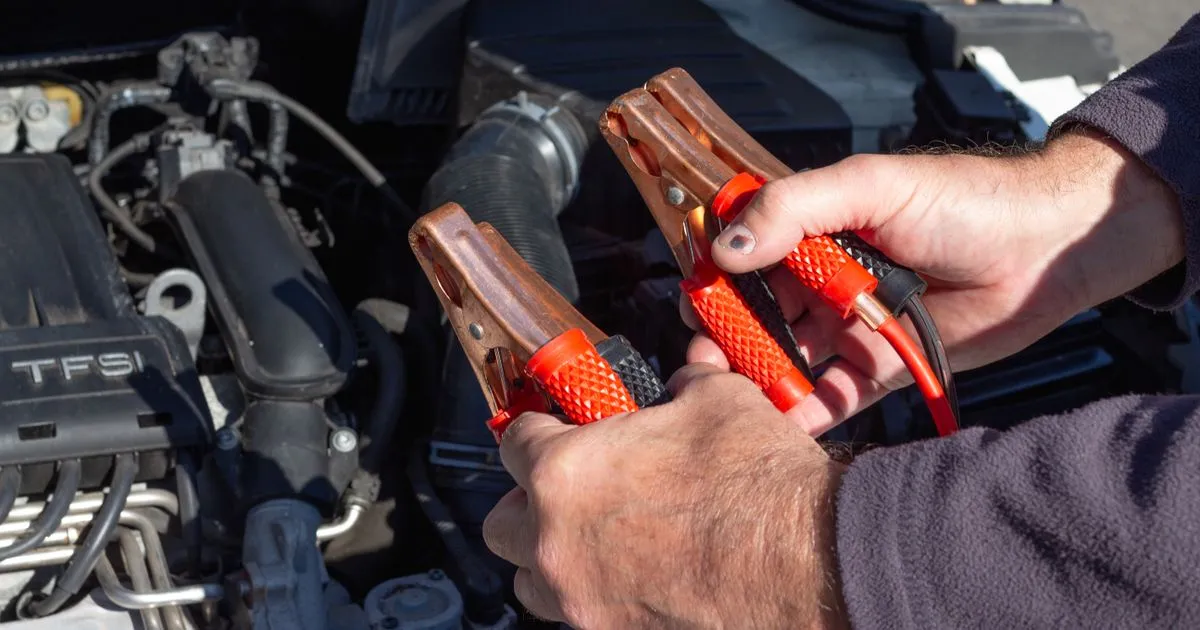
- A car battery, installed — $250–$330 at current prices, and the most common winter breakdown in the country.
- Brake pads on one axle — the repair you can hear coming but can’t always schedule around payday.
- A vet exam plus medication — the $200–$350 visit every pet owner knows arrives without warning, usually on a weekend at after-hours-clinic rates.
- A working replacement phone — mid-range, unlocked, bought that day, for the week the old one met the pavement screen-first.
The shared trait: each is one-off, urgent, and has a real cost of waiting — a car that won’t start costs shifts, an untreated pet gets more expensive, a dead phone misses callbacks. That’s the profile a $300 loan is shaped for.
The $300 Repayment Math, Two Ways
Term length is the lever you control, so here’s the same $300 at 34.99% APR on two schedules:
- Over 3 months: about $106/month, roughly $16 total interest. The right default — short, cheap, done by spring.
- Over 6 months: about $55/month, roughly $31 total interest. The right choice only when $106 a month would genuinely strain the budget — you’re paying $15 extra for breathing room, which is honest money if you need it and wasted money if you don’t.
And the early-repayment trick works at every size: take the 6-month term for safety, then clear it in month three when the overtime lands, and you’ll pay close to the 3-month cost anyway. Most lenders in the network allow it without penalty — confirm in the agreement.
The Battery Math: Borrowing vs. Doing Nothing
The $300 decision is usually really a transportation decision, so run the real comparison. Doing nothing about a dying car costs, in rough 2026 numbers: a boost or tow ($60–$150 if you’re not covered), missed shifts while you arrange rides (a day’s wages or more), and the gamble that the no-start happens somewhere worse than your driveway. Against that, $16 of interest is barely a line item. The same logic runs in reverse for the vet visit and the phone — and runs against borrowing when the expense has no waiting cost at all. The $300 question is never “can I get the loan?” (with steady employment income, almost certainly); it’s “what does waiting actually cost?”
The $300 Prevention List: Beating the Next Emergency
The cheapest $300 loan is the one you never need, and most $300 surprises broadcast themselves months in advance. The prevention list, in rough order of payoff:
- Battery test every October. Most auto parts stores and many shops test batteries free in minutes. Canadian batteries last four to six winters; a $25 proactive trickle-charger or a planned replacement in fall beats a no-start in January every time.
- Listen to the brakes early. The first faint squeal is a $200 pad job; six months of ignoring it is a $500 pads-and-rotors job. The interval between those two prices is exactly where borrowing gets avoidable.
- Price pet insurance honestly. At $40–$80 a month it isn’t for everyone — but if your pet’s breed is prone to issues and a surprise $300 vet bill would mean borrowing, the premium is functionally a payment plan you chose in advance.
- Case and insure the phone. A $30 case plus a $12/month protection plan is grudging money — until the screen meets concrete in week three of a $300 loan you took for the last phone.
- Keep the float once you’ve built it. After this loan ends, redirect one more month of the payment into savings. A standing $100–$300 float converts most future surprises back into ordinary Tuesdays.
None of this helps the week the battery is already dead — that’s what the loan is for. It’s the list for the month after, when the payments end and the habit they built is briefly, usefully, still alive.
More $300 Loan Questions
Can I get $300 the same business day I apply?
Routinely, yes — on a business day, finish the application and IBV check before early afternoon, sign promptly, and have Autodeposit enabled. The $300 tier moves at the same speed as every other amount: decision in minutes, e-Transfer often within hours.
Does a $300 loan show up on my credit report?
Applying through BorrowNow.ca doesn’t — there’s no credit check at the matching stage, and IBV never touches your file. Whether the loan itself reports depends on the lender: some report instalment loans to Equifax or TransUnion (where on-time payments help you), some don’t. If credit-building matters, ask the lender before signing; if staying invisible matters, ask the same question.
Is a used or refurbished part worth it at this price point?
Often, yes — with one condition: a warranty. A tested used battery with a one-year shop warranty at $150 is a defensible substitute for a $300 new one; an as-is battery from a marketplace listing is a coin flip that can cost you the original $300 anyway. The same logic covers refurbished phones (buy carrier- or manufacturer-refurbished, not “open box, no returns”). Halving the expense halves the loan — but only when the cheaper part comes with someone standing behind it.
Should I borrow $300 or put the repair on a credit card?
If you’ll clear the card at the next statement, the card wins — that’s free credit. If the balance would ride for months at 22.99% with nothing forcing it down, the fixed-schedule loan usually costs less in real life: $16 over three months, then done. The honest question is which version of you repays it.
After the crunch, how do I avoid the next $300 loan?
Seed a rainy-day float with the same discipline the loan taught you: when the final payment ends, keep “paying” that $106 to a savings account for three more months. That’s a $300 buffer by fall — and the next battery comes out of it interest-free.
Coast to coast: these loans are available online in every Canadian province and territory — no branch network required. Amounts ($50 to $50,000), IBV income verification, and e-Transfer funding work identically from Vancouver to St. John’s, with the 35% APR federal cap applying nationwide.
Frequently Asked Questions
Can I borrow $300 online in Canada with bad credit?
Yes. BorrowNow.ca connects you with lenders who specialize in approving all credit types — including poor credit, past collections, and no credit history. Your employment income and ability to repay matter more than your credit score.
How soon will I receive $300 after approval?
Most approved applicants receive their $300 by Interac e-Transfer within a few hours of signing. Applications submitted before 2:00 PM on business days are typically funded the same business day.
Does applying for a $300 loan affect my credit score?
Applying through BorrowNow.ca does not trigger a hard credit check, so it will not lower your score. Your matched lender may run their own assessment, but many lenders in our network focus on income verification (via IBV) rather than your credit score alone.
What income do I need to borrow $300 in Canada?
Lenders look for steady full-time or part-time employment income deposited to a Canadian bank account. There is no single fixed minimum; the amount you can borrow scales with your income, and IBV confirms it automatically when you apply.
Can I borrow $300 online in Canada if I was previously declined?
Yes. Being declined by a bank or another lender does not prevent you from applying at BorrowNow.ca. Our network includes lenders who specialize in approving Canadians who have been turned down elsewhere.
Other Loan Amounts Available at BorrowNow.ca
Need a different amount? BorrowNow.ca offers online loans from $50 to $50,000 in Canada. Browse by amount:
About the Author
Tony Freanisco — Personal Finance Writer
Tony Freanisco writes about online lending, credit, and small-dollar borrowing for Canadians at BorrowNow.ca. He focuses on helping readers borrow responsibly, understand the cost of credit under Canada’s 35% APR cap, and choose lenders that follow Financial Consumer Agency of Canada (FCAC) guidelines. Read more from Tony Freanisco →
Disclaimer: BorrowNow.ca is not a lender; we connect Canadians with lenders in our network. Loan amounts ($50 to $50,000), rates, terms, and approval are set by the lender and depend on your province and financial situation. All loans are subject to the federal 35% APR criminal interest rate cap. Borrow only what you can afford to repay.